
Custom Home Building in Portola Valley, CA
Local Custom Home Builder Expertise
In Portola Valley's Westridge neighborhood and across the Santa Cruz Mountain slopes, custom home builder and general contractor services demand builders who understand strict hillside regulations, geotechnical site conditions, and mid-century architectural preservation. Our page covers what to expect when building, remodeling, or expanding a home in this exclusive community where architectural review, ground stability assessments, and design integrity shape every project.
Learn how local builders navigate Portola Valley's Architectural & Site Control Commission (ASCC) requirements, lot constraints, and the town's commitment to environmental sensitivity while crafting high-end residences.
How the Build Process Works
Building a custom home in Portola Valley requires early coordination with town staff and geological reviews. Most projects follow a clear sequence from site assessment through final inspection.
Site Analysis & Town Review
Meet with town staff early to discuss lot constraints, geology, design guidelines. ASCC review is mandatory for buildings 400+ sq. ft.
Geotechnical Reports
Town Geologist reviews all new construction, pools, and additions over 500 sq. ft. due to fault proximity and slope stability.
Permits & Design Approval
Submit complete plans to Building Dept. Design must comply with Town Guidelines; ASCC ensures homes blend with landscape.
Grading & Site Prep
Work over 1,000 cubic yards requires Town Engineer oversight. Hillside lots in Central Portola Valley and Blue Oaks demand careful grading plans.
Construction & Inspections
Regular inspections verify compliance with codes. Builders coordinate structural, electrical, and mechanical milestones with town staff.
Final Sign-Off
Certificate of Completion issued. Landscaping finalized. Home ready for occupancy with full permit compliance documented.
You'll always know what's happening next—and why. Clear town requirements mean no surprises.
Services & Project Types
New Custom Home Construction
Building new on vacant Portola Valley land requires navigating floor area limits, setback rules, and architectural harmony. Most new homes range 5,500–6,000 sq. ft. plus basements. Lot size matters: Westridge parcels start at 2.5 acres. Contemporary, mid-century modern, Mediterranean, and Craftsman styles all thrive when designed with Portola Valley's natural landscape in mind.
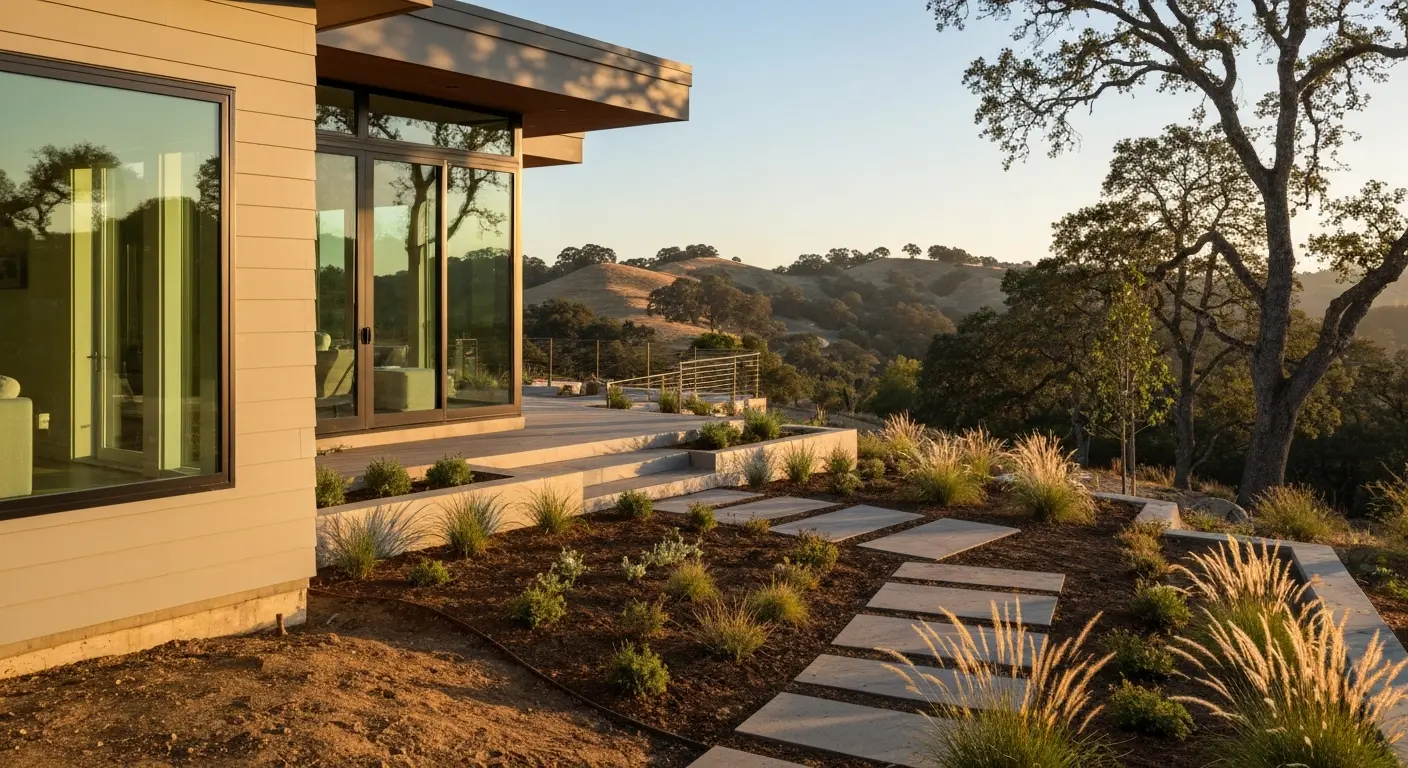
Contemporary new build in Westridge neighborhood with panoramic valley views and native landscaping
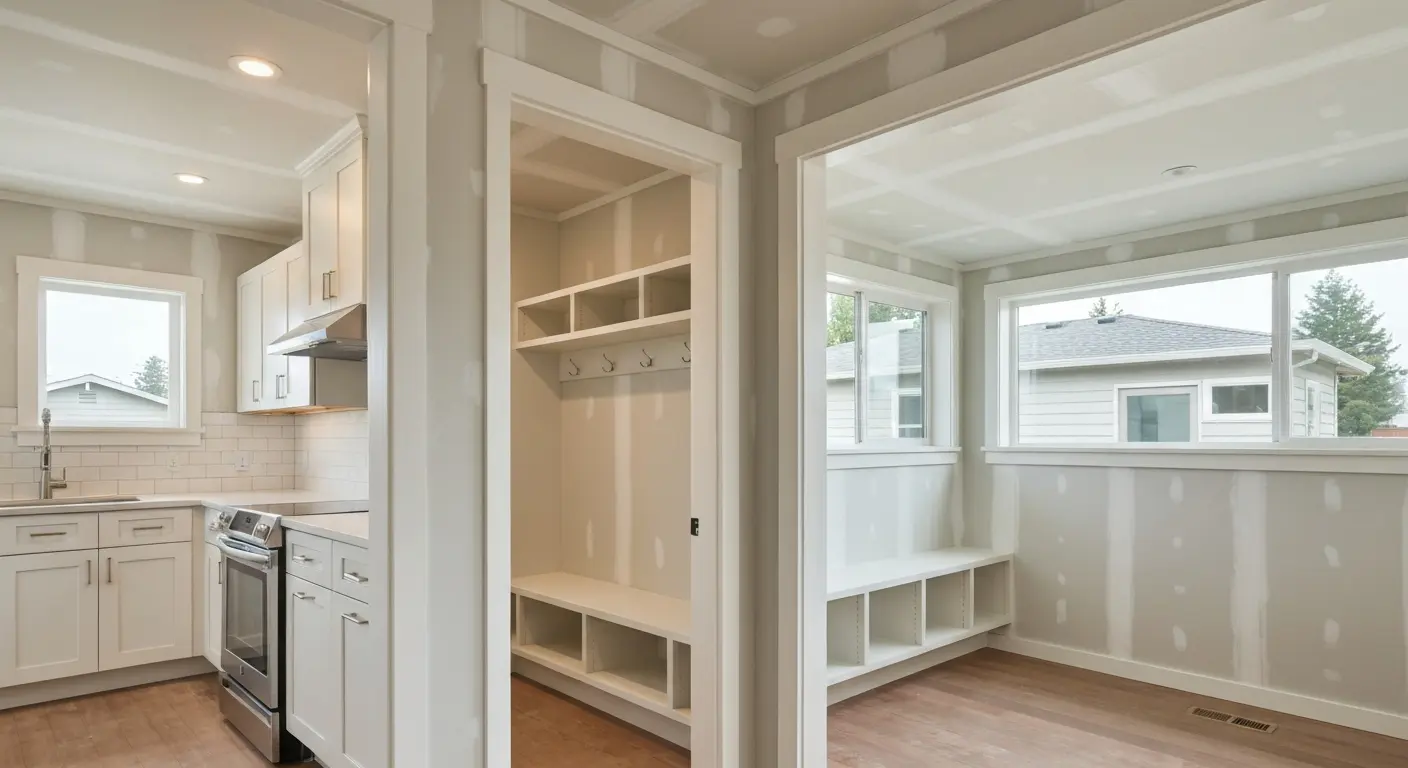
Expanded kitchen and mudroom addition to mid-century home in Central Portola Valley
Additions & Expansions
Expanding an existing home means respecting floor area caps, maintaining architectural consistency, and securing ASCC approval for projects over 400 sq. ft. Modern kitchens, master suites, guest structures, and basements all fit within Portola Valley's regulations when properly sited.
Hillside & Steep Lot Homes
The Santa Cruz Mountain slopes define Portola Valley. Builders experienced with cantilevered structures, retaining walls, and multi-level designs maximize views while minimizing environmental impact. Geotechnical reports are standard; foundation engineering is critical on steep terrain.
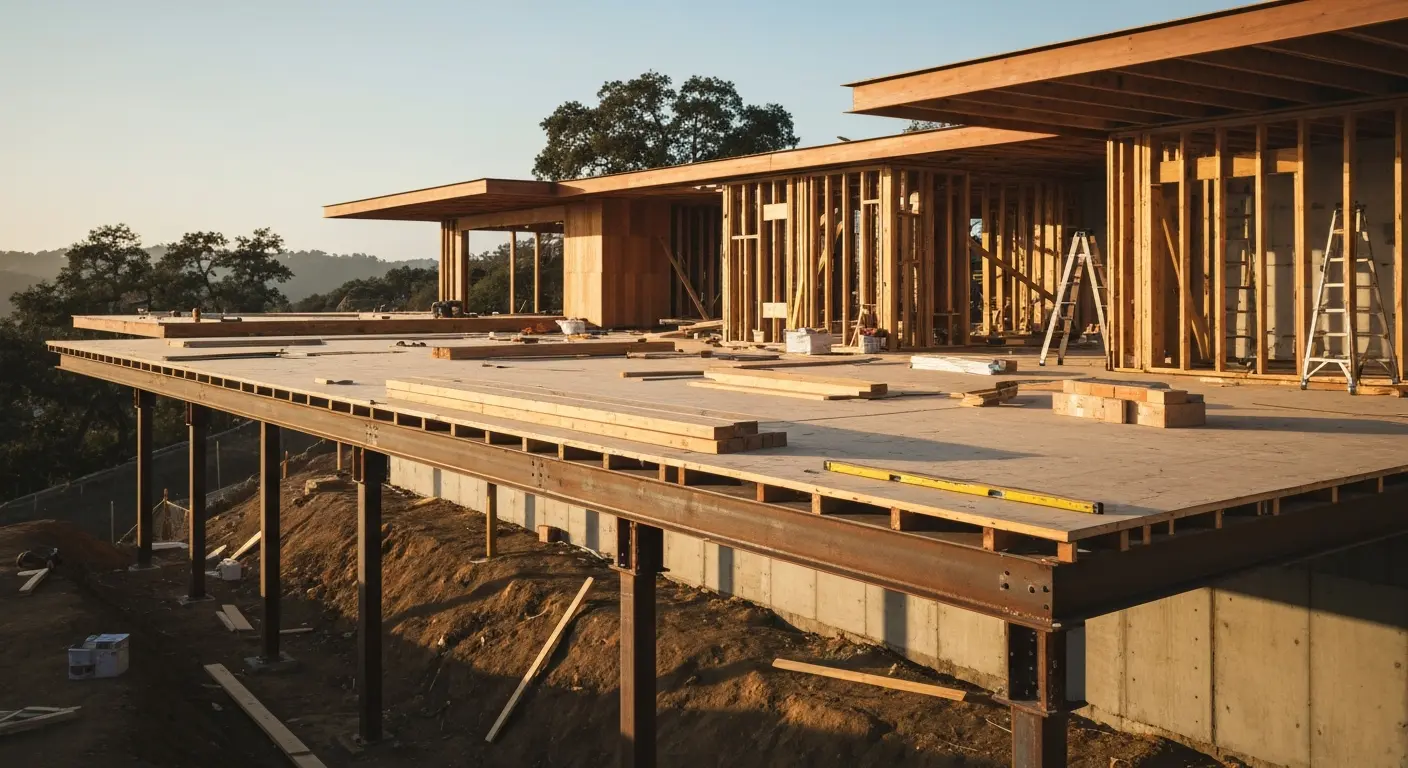
Multi-level contemporary home on steep Portola Valley Ranch slope with cantilevered deck
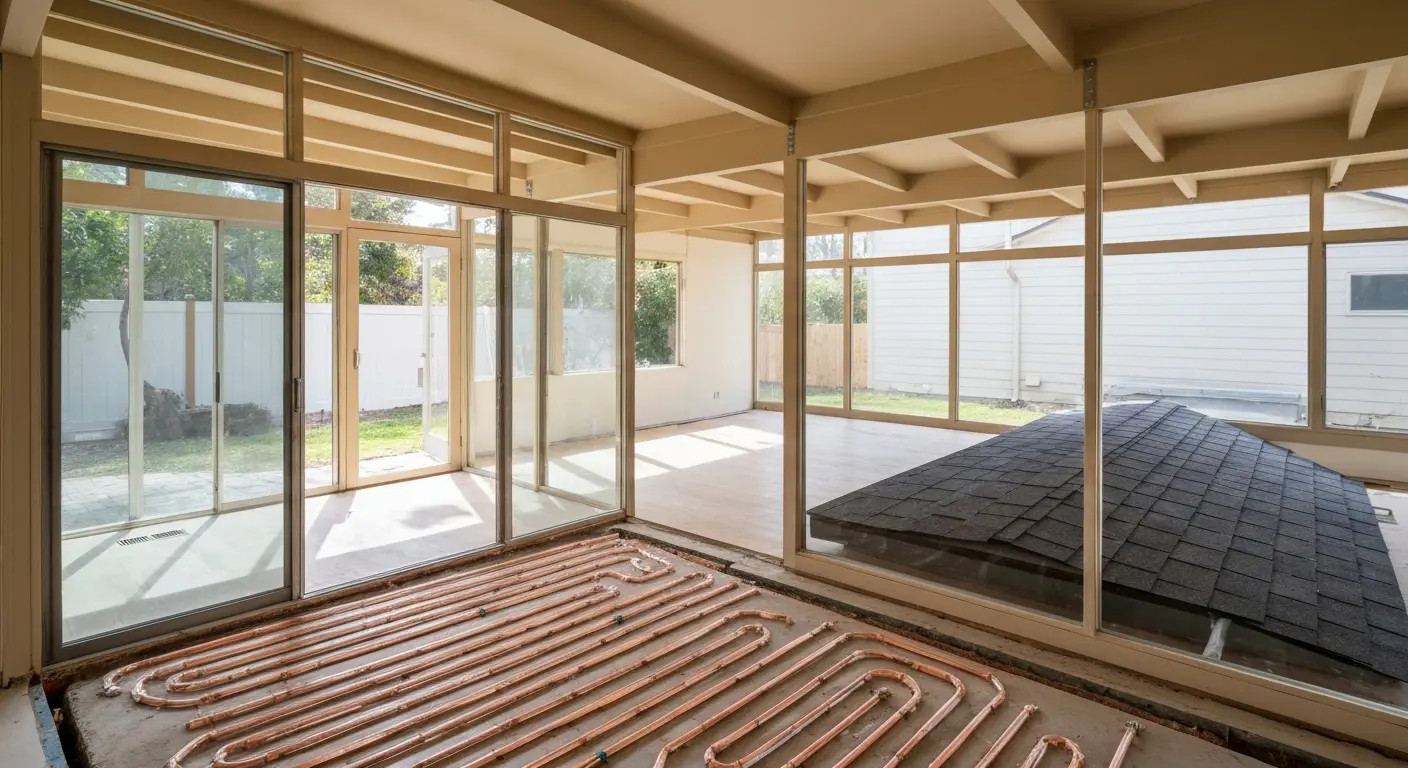
Restored Eichler home with updated systems, new roofing, and expanded radiant heating
Mid-Century Modern Renovation
Portola Valley's mid-century Eichler and modernist stock deserves respectful restoration. Upgrading electrical, HVAC, insulation, and waterproofing while preserving iconic open-plan layouts keeps these homes current. Design integrity and energy efficiency go hand-in-hand.
Why Portola Valley Building Demands Local Expertise
Architectural Review & Design Guidelines
The town enforces restrictions on architectural styles and sizes because officials want homes to keep the town's signature look, and newest homes must adhere to restrictions and can't stray far from Portola Valley's aesthetic. The Architectural & Site Control Commission (ASCC) holds the 2nd and 4th Monday meetings each month. ASCC meetings occur at 7:30 p.m. in the Historic Schoolhouse and include site visits with applicants and design teams.
Geotechnical & Slope Stability Requirements
The town's geologic setting is a major determinant of policies, and since 1965 has evolved an innovative approach to regulating lands crossed by the San Andreas fault and steep, unstable slopes. Any new residential construction or additions exceeding 500 sq. ft. require Town Geologist review. Swimming pools, site development, and hillside sites need geological assessment before permits issue.
Large Lot Requirements & Open Space Preservation
Portola Valley divides into six neighborhoods: Central Portola Valley, Portola Valley Ranch, Corte Madera, Woodside Highlands, Westridge, and Blue Oaks. Westridge requires minimum 2.5-acre lots and features strict architectural guidelines promoting seclusion. Blue Oaks offers 2-acre lots surrounded by 285 acres of dedicated open space and trails. Low-density development preserves the town's natural character.
Portola Valley's Building & Community Context
With narrow roads and a secluded feel less than a mile from Interstate 280 and less than 2 miles from Stanford University's center, Portola Valley feels miles away from Silicon Valley. The town was incorporated in 1964 with the goal of preserving beauty, fostering low-density housing, and many developments limit ridgetop buildings to preserve the natural environment.
Portola Valley is a treasure trove for mid-century modern and modernist architecture, with a unique blend of historically significant Eichler homes and custom modernist estates by renowned architects. The 2010 Census reported 70% of housing units had six or more rooms, and most new homes are now 5,500–6,000 sq. ft. plus basements.
Experienced builders know the ASCC process, understand geotechnical constraints, and respect both the town's environmental values and its commitment to architectural excellence. Working with local contractors who've successfully navigated multiple projects ensures your vision aligns with reality.
What to Know About Building in Portola Valley
Design & Floor Area Limits
The town caps floor area based on lot size and steepness. Floor area for residential uses is the total floor area as measured from exterior walls for all buildings on a parcel. Basements have special rules: A basement is a floor level directly under a building meeting zoning provisions, with ceiling height not exceeding twelve feet under the first floor, and basements don't count toward floor area. Impervious surface (driveways, decks, pools) is also regulated to minimize runoff on hillsides.
Permit Triggers & ASCC Review
The ASCC reviews applications for buildings or additions of 400+ sq. ft., or two stories or more; all commercial buildings; all permits on arterial-road-fronting parcels; tennis courts; conditional use permits; and grading over 100 cubic yards. Early consultation with town staff is key. All proposed work must conform to Town Zoning Ordinance and Design Guidelines whether or not a building permit is required.
Geotechnical Reports & San Andreas Fault Zone
Proximity to the San Andreas Fault and hillside locations require careful review of geological reports, and earthquake insurance is a prudent consideration. Applications are referred to the Town Geologist for all site development permits, foundation work over 35 lineal feet, swimming pools, Alquist-Priolo Act sites, E-F zone setback sites, flood zones, and new construction and additions exceeding 500 sq. ft.
Grading & Site Work
Grading work exceeding 1,000 cubic yards involves the Town Engineer, Town Geologist, Town Planner, and site development committee. Hillside lots demand careful drainage design and slope stability analysis. Large vegetation removals also trigger review. Minor site work (under 100 cubic yards) is less regulated but still requires compliance with Design Guidelines.
Architectural Styles & Neighborhood Character
Westridge enforces strict design covenants requiring homes blend with landscape and meet aesthetic guidelines to preserve the rural and charming character, resulting in neighborhoods where high-end modern architecture thrives from 1950s Cliff May estates to cutting-edge new builds. Craftsman-style estates with refined woodwork appeal to buyers seeking timeless elegance, while Mediterranean and Tuscan villas appear on larger parcels with courtyards and resort-style amenities.
Getting Here & Serving Portola Valley
Portola Valley spans six neighborhoods: Central Portola Valley, Portola Valley Ranch, Corte Madera, Woodside Highlands, Westridge, and Blue Oaks. Serving custom home builders and general contractors across all six areas, we work closely with town planning staff and contractors familiar with each neighborhood's specific character and requirements.
Key Landmarks & Access
Portola Valley's main artery is Alpine Road, connecting the town to Palo Alto and Stanford. Los Trancos Road runs along the town's western edge. Portola Valley is known for its extensive trail network both maintained by the town and in the Windy Hill Open Space Preserve maintained by the Midpeninsula Regional Open Space District. Nineteen hundred acres of permanent open space exist within the town, and residents treasure the town's environmental and historic heritage, excellent public schools, and volunteer-staffed town government.
Contact & Engagement
Early contact with town staff is highly recommended; staff can assist in identifying concerns prior to finalization of plans. As plans develop, meet with staff to share your direction. Staff is available at the project site or in office to review proposed plans and how they relate to the community. The Town of Portola Valley is located at the base of the Santa Cruz Mountains, west of Palo Alto.
Builders and homeowners considering projects in Westridge, Blue Oaks, Portola Valley Ranch, or Central Portola Valley benefit from early conversations with contractors who've successfully guided multiple projects through ASCC review and town approvals. The investment in understanding the process up front pays dividends in clear timelines and design success.
Frequently Asked Questions
Do I need ASCC approval for my home project?
Yes, if your project involves a building or addition of 400+ sq. ft., two or more stories, a swimming pool, or work on an arterial-road-fronting parcel. Early consultation with town staff confirms your project's review pathway.
What is the Town Geologist's role in my project?
Any new construction or addition over 500 sq. ft., all swimming pools, and sites within fault zones or flood areas require Town Geologist review. A geotechnical report documents soil stability, drainage, and earthquake risks specific to your hillside lot.
Can I build as large as I want on my lot?
No. Portola Valley limits floor area based on lot size and terrain steepness. A contractor familiar with the zoning code can calculate your home's allowed square footage, including basements, which don't count toward the limit.
What are Portola Valley's architectural restrictions?
Homes must blend with the landscape and conform to Town Design Guidelines. Contemporary, mid-century modern, Mediterranean, Tuscan, Craftsman, and ranch styles all succeed when designed with attention to siting, materials, and natural surroundings. Your architect should review the Design Guidelines early in planning.
Do I need earthquake insurance for a Portola Valley home?
Portola Valley sits within a seismically active zone near the San Andreas Fault. Most insurance professionals recommend earthquake coverage, especially on hillside properties. Your geotechnical engineer and insurance agent can assess your specific risk.
What's involved in updating an older mid-century home?
Restoring Eichler or modernist homes typically includes electrical and HVAC upgrades, improved insulation and waterproofing, new roofing, and radiant heating installation. The ASCC will review exterior changes; interior modernization is often straightforward when it preserves the home's original design intent.
DISCOVER WHAT OUR CUSTOMERS HAVE TO SAY ABOUT US
REVIEWS
proudly serving these areas
Los Gatos, CA
Saratoga, CA
Monte Sereno, CA
San Jose, CA
Los Altos, CA
Los Altos Hills, CA
Atherton, CA
Woodside, CA
READY TO take the next step?
get a free quote TODAY!

QUICK LINKS
our services
service areas
operating HOURS
Mon: 8:00 am - 5:00 pm
Tue: 8:00 am - 5:00 pm
Wed: 8:00 am - 5:00 pm
Thu: 8:00 am - 5:00 pm
Fri: 8:00 am - 5:00 pm
Sat: Closed - Closed
Sun: Closed - Closed